Research question
This study evaluated machine-learning models for predicting saturated hydraulic conductivity from soil properties.
Methods
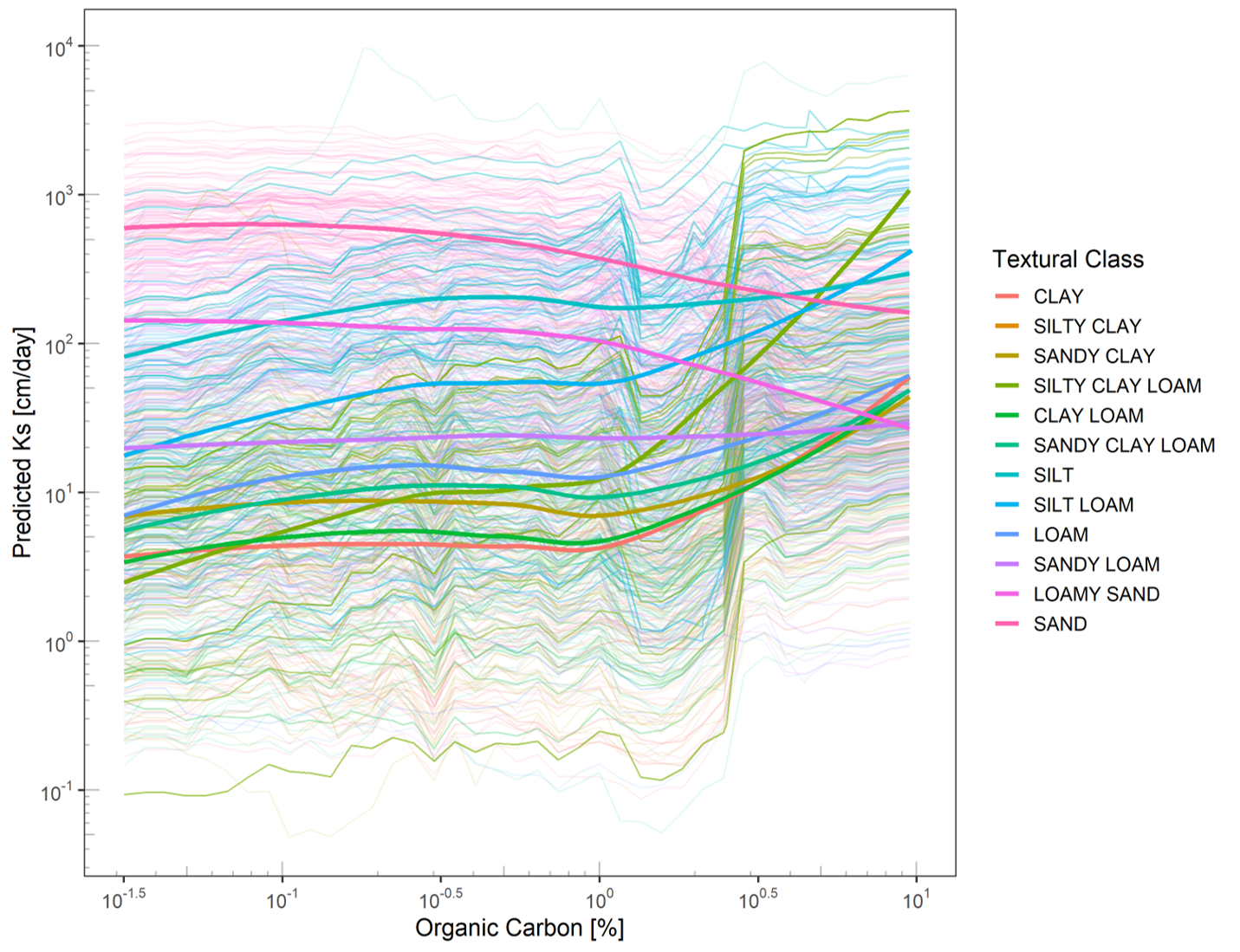
With my doctoral advisor Teamrat Ghezzehei, I developed and compared machine-learning models using a database of more than 18,000 soils. We studied how predictor choices affected performance and examined the relationships between predicted conductivity, texture, bulk density, and organic carbon.
The resulting study was published in Water Resources Research. The models and supporting code are available in a public repository.
Code and interface
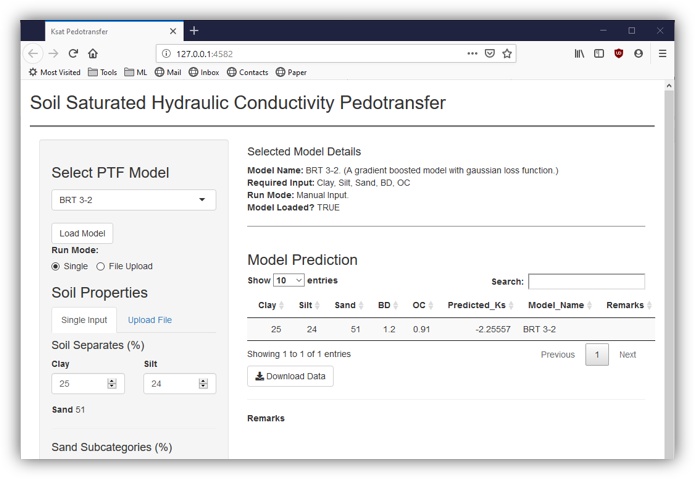
I developed a graphical interface for running the models. The model code and interface are available in the project repository.
Model analysis
We examined how predicted conductivity changed with bulk density and organic carbon, including differences between soil textural classes.